
Future proofing our national treasures
Wits is home to thousands of world renowned and priceless collections. Digitisation is key to being able to share these treasures with local and international researchers and other users, but also to secure their long-term security.
Projects:
1. Understanding our deep human journey by endowing the future
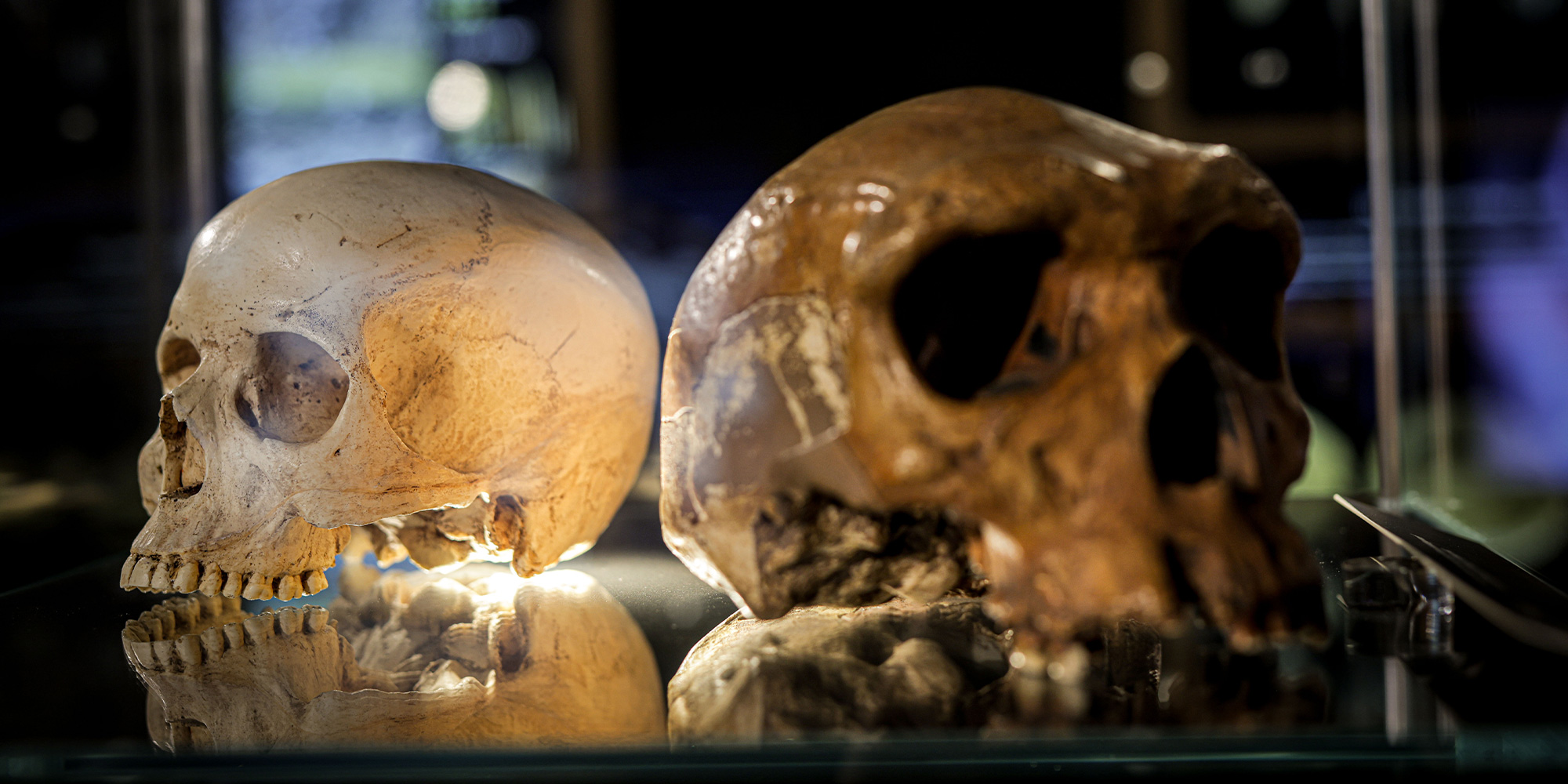
The newly established Centre for the Exploration of the Deep Human Journey builds on Wits’ long-standing pre-eminence in the field of paleoanthropology. The endowment will build a permanent home for this science, and ensure that a long lasting legacy of exploration, discovery and science continues into the future. It is the ultimate African science, as all of humanity is ultimately from Africa. By establishing this legacy fund, Wits will remain central to shedding light on our shared human journey.
(The PV Tobias Chair in Palaeoanthropology is a permanent endowed research position established at the University of the Witwatersrand (Wits) in memory of Professor Phillip V. Tobias. The Chair is intended to honour his significant contributions to the field of human origins and continue his legacy of teaching and mentoring.
About Professor Phillip V. Tobias
Professor Tobias (1925–2012) was a renowned South African paleoanthropologist and Professor Emeritus at Wits University. He was a leading figure in human origins research and was best known for his work on hominid fossils in Africa, particularly the Sterkfontein Caves in the "Cradle of Humankind" World Heritage Site.)
2. Creating archives of the future by learning from our unmatched record of the past
We are seeking support for the Wits Central Archive, which includes the Historical Papers Research Archive, one of the largest and most comprehensive independent archives in southern Africa. The Archive houses over 3 400 collections of historical, political and cultural importance, from the mid-17th Century to the present. It includes Nelson Mandela’s original papers from the Rivonia Trial, which led to his imprisonment. The Archive is an invaluable resource for scholars seeking lessons from our political and social history.
3. Utilising new technologies to revolutionise the understanding of key collections
The application of technologies such as Virtual and Augmented Reality will revolutionise the way we research, interpret and display many of our key collections for the University community and the general public.
4. Wits Cultural Precinct
Culture-lead urban regeneration has become globally accepted as a strategy to address elements of city decay. As part of Wits’ efforts to lead the urban renewal of the Braamfontein campus fringes, in partnership with the Braamfontein Improvement District and JoziMy Jozi, creating safe transit and living spaces for more than 15 000 Wits Students located in private residences on the outside of the campus boundaries, the university is rejuvenating the Wits Cultural Precinct – creating a corridor of art and culture to naturally link into the world of science and engineering, and merging culturally rich social interactions with academics and inquisitive exploration. The Wits Cultural Precinct provides an immersive interactive corridor from the Wits Art Museum, to the Wits Chris Seabrook Music Hall, The Nunnery, the Wits Theatre, the Amphitheatre, the Downstairs Theatre, crossing paths with the Schools of Arts, Chemistry and Physics, and arriving at the Wits Great Hall.
